
 Verified hotel photograph Paris
 Ritz Paris
A hotel that helped define modern luxury while remaining inseparable from the cultural mythology of Place Vendôme.
The opening selection
Rooms, façades, collections and gestures of hospitality can carry the culture of a place. Every address here has been chosen for the story it allows a traveler to inhabit.
The Artshotels Stay Compass
Choose by feeling and cultural rhythm rather than by price alone. In three questions, the Compass identifies the addresses in the opening collection that most closely match your way of travelling.
The place
The rhythm
The journey
Your closest matches
This is an editorial orientation based on the opening collection, not a ranking of hotel quality or availability.
The complete opening selection
Use the city filter when the destination is already decided, or return to the Compass when the atmosphere matters more than the map.
40 considered addresses
Verified hotel photograph Paris A hotel that helped define modern luxury while remaining inseparable from the cultural mythology of Place Vendôme.
 Verified hotel photograph Paris
 A palace opposite the Tuileries where classical Paris and a long tradition of artistic eccentricity meet.
 Verified hotel photograph Paris
 An eighteenth-century landmark on Place de la Concorde, restored as a composed expression of French decorative arts.
 Verified hotel photograph Paris
 A discreet Champs-Élysées address whose scale and collection preserve the feeling of a private Parisian house.
 Verified hotel photograph London
 A Mayfair institution where nineteenth-century hotel culture, Art Deco design and contemporary art remain in active dialogue.
 Verified hotel photograph London
 London’s pioneering luxury hotel, shaped by theatre, music, innovation and its enduring view over the Thames.
 Verified hotel photograph London
 A family-owned London institution whose gardens, craftsmanship and service preserve the rhythm of a private house.
 Verified hotel photograph London
 A former hospital transformed into a Regency-style hotel at the meeting point of Hyde Park and ceremonial London.
 Verified hotel photograph Florence
 A Renaissance palazzo and former convent joined by one of Florence’s largest private gardens.
 Verified hotel photograph Florence
 An opulent villa above the Boboli Gardens, shaped by nineteenth-century ceremony and restored as an intimate grand hotel.
 Editorial atmosphere · FlorenceHotel photography pending verification Florence
 A Renaissance-rooted palazzo on the Arno whose ceremonial rooms connect Florentine craft with river views.
 Verified hotel photograph Florence
 A long-established central hotel where nineteenth-century hospitality meets a carefully restored contemporary wing.
 Verified hotel photograph Rome
 A classical Roman hotel with a celebrated terraced garden between Piazza del Popolo and the Spanish Steps.
 Verified hotel photograph Rome
 A family-led Roman landmark above the Spanish Steps, known for ceremonial views and long continuity of hospitality.
 Verified hotel photograph Rome
 A composed late-nineteenth-century hotel above Via Veneto, balancing city views with a cultivated residential atmosphere.
 Verified hotel photograph Rome
 A contemporary hotel inside a restored palazzo whose archaeology, monumental staircase and church frontage remain legible.
 Verified hotel photograph Venice
 A noble residence on the Grand Canal where Venetian craftsmanship and the culture of the grand tour remain tangible.
 Verified hotel photograph Venice
 An intimate hotel inside Palazzo Papadopoli, distinguished by monumental rooms, frescoes and rare private gardens.
 Verified hotel photograph Venice
 A deeply historic address beside Piazza San Marco, with frescoed salons and direct access from the lagoon.
 Verified hotel photograph Venice
 A lagoon-side institution whose gardens and island perspective offer a cultivated counterpoint to central Venice.
 Verified hotel photograph Madrid
 A Belle Époque landmark conceived for royal Madrid and positioned within the city’s great museum triangle.
 Verified hotel photograph Madrid
 The former residence of the Duke of Santo Mauro, retaining the scale and garden rhythm of a private Madrid palace.
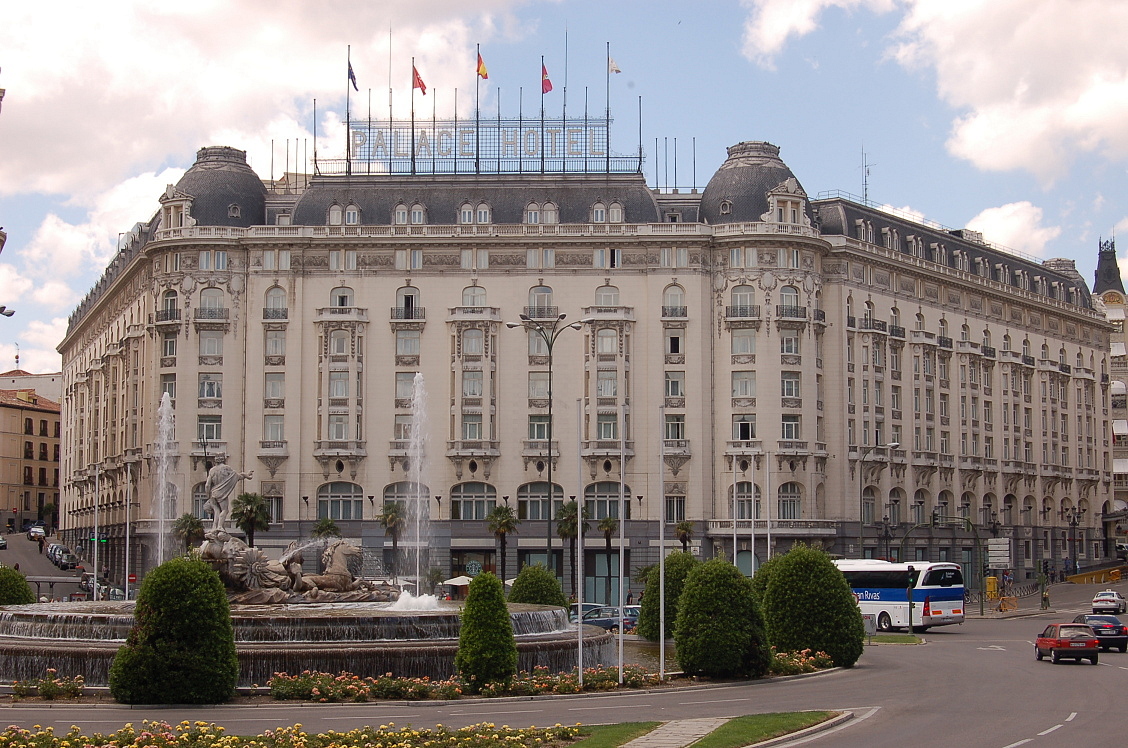 Verified hotel photograph Madrid
 A 1912 Madrid institution crowned by a stained-glass rotunda and embedded in the city’s literary and museum quarter.
 Verified hotel photograph Madrid
 Madrid’s oldest luxury-hotel lineage, reinterpreted as an intimate address in the Barrio de las Letras.
 Verified hotel photograph Vienna
 A family-owned Viennese institution opposite the State Opera, inseparable from the city’s cultural and social history.
 Verified hotel photograph Vienna
 A former ducal residence on the Ringstrasse, converted into a hotel for the 1873 Vienna World’s Fair.
 Verified hotel photograph Vienna
 An opera-facing grand hotel with distinctive fin-de-siècle and Art Nouveau interiors.
 Verified hotel photograph Vienna
 A former bank headquarters on Am Hof, adapted with care into a contemporary hotel within Vienna’s historic core.
 Verified hotel photograph Prague
 A hotel woven through seven historic buildings around a functioning Augustinian monastery in Malá Strana.
 Editorial atmosphere · PragueHotel photography pending verification Prague
 Four buildings spanning Renaissance, Baroque, classical and contemporary Prague beside the Vltava.
 Editorial atmosphere · PragueHotel photography pending verification Prague
 A music-centred hotel beside the Vrtba Garden, connecting historic Malá Strana with a living collection of recordings and art.
 Verified hotel photograph Prague
 A richly decorated Baroque residence in Malá Strana, preserving vaults, courtyards and an atmosphere of old Prague.
 Verified hotel photograph Istanbul
 An 1892 hotel created for Orient Express travelers, carrying the cosmopolitan memory of late-Ottoman Pera.
 Verified hotel photograph Istanbul
 An Ottoman imperial palace on the Bosphorus, offering a monumental encounter with Istanbul’s dynastic waterfront.
 Verified hotel photograph Istanbul
 A restored neoclassical building in Sultanahmet whose courtyard provides calm beside Istanbul’s principal monuments.
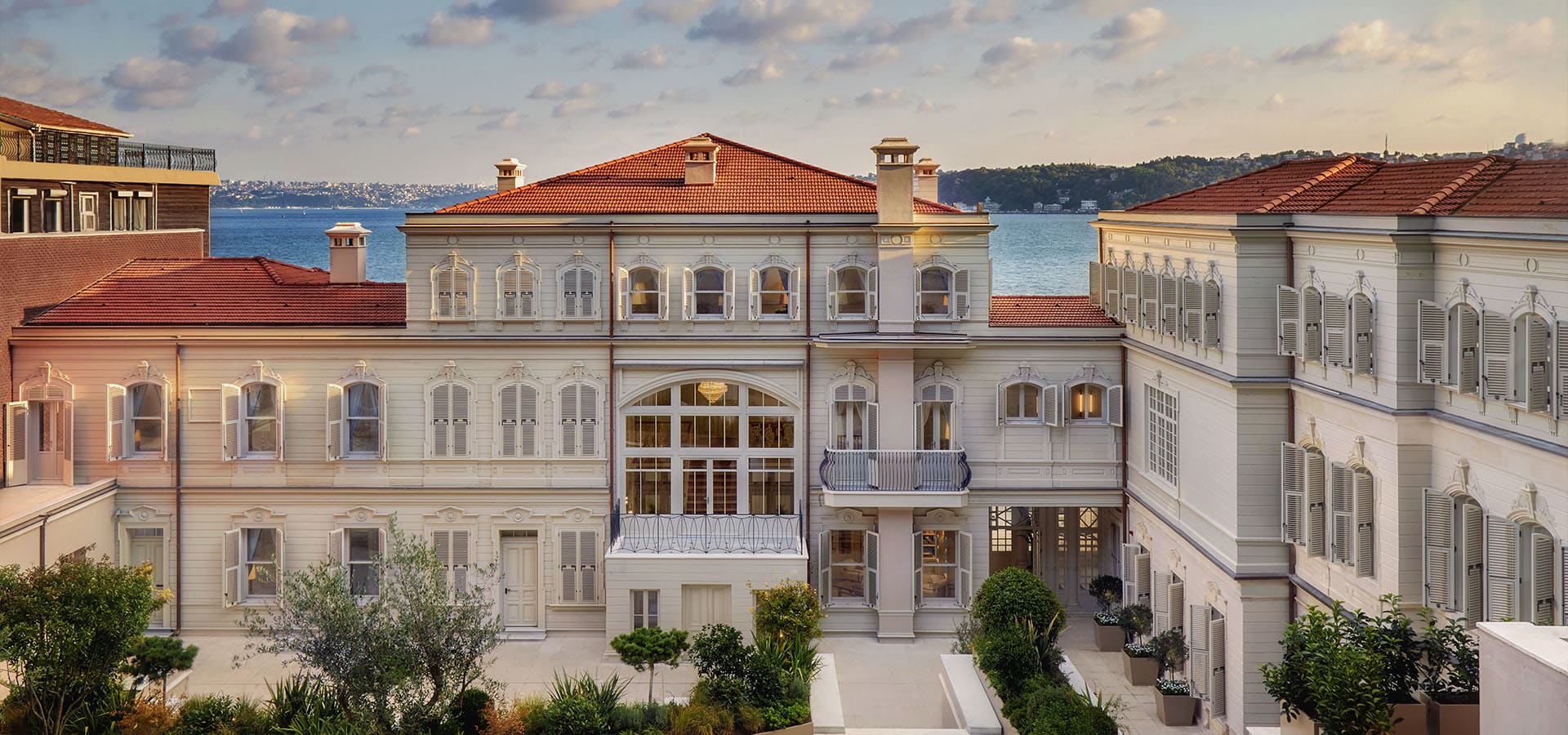 Verified hotel photograph Istanbul
 Two restored Ottoman-era mansions on the Bosphorus, balancing domestic scale with a landscaped waterfront setting.
 Verified hotel photograph Lisbon
 A 1959 landmark whose modernist architecture and Portuguese art collection define Lisbon’s postwar grand-hotel identity.
 Verified hotel photograph Lisbon
 A restored nineteenth-century palace and gardens whose decorative programme reflects Lisbon’s cosmopolitan age.
 Verified hotel photograph Lisbon
 A group of Pombaline buildings on Praça Luís de Camões, reworked as a contemporary expression of Lisbon’s cultural centre.
 Verified hotel photograph Lisbon
 The restored home of architect João Frederico Ludovice, joining Lisbon’s Baroque history with Portuguese wine culture.
No hotels match this view yet. Return to the complete selection or explore another destination.